A compassion-focused approach
This is the first in a series of articles to help you start writing again. They suggest new ways to think about your process, as well as practical tips and techniques, whether you’re completely blocked, or able to write but frustrated with your lack of progress. The goal is to rediscover what started you writing in the first place and make writing an interesting and fulfilling challenge, rather than a chore.
The techniques that follow are based on compassion-focused therapy (CFT), an evidence-based therapy modality. A CFT approach can benefit anyone but it’s particularly suited to the needs of neurodivergent people, especially those who struggle with executive function, emotional regulation and self-doubt. This article is a brief overview of some CFT concepts that will be referred to in the rest of the series.
CFT and self-regulation
Compassion-focused therapy frames being stuck with your writing as a challenge of self-regulation, that is, the ability to manage your emotions- to get yourself to do something, or to stop doing something. The advantage of CFT is that its methods are sustainable and effective and won’t cause burnout and exhaustion.
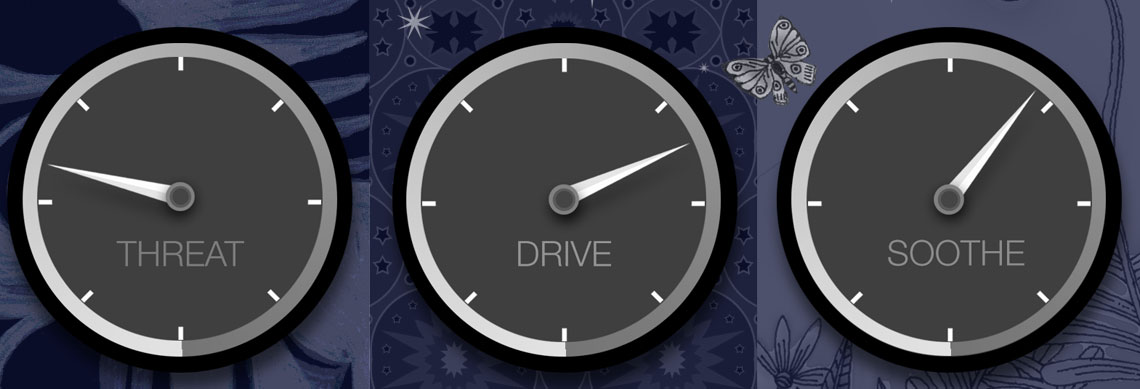
According to the CFT approach, we, as humans, use three systems to self-regulate. The threat system, the drive system and the soothe system. Each has its place in your life. Knowing how to choose the correct system for a particular situation can mean the difference between success or frustration.

Threat system
The threat system is all about avoiding danger. This is the mode that most of us are familiar with. Scaring yourself into action by evoking all the bad things that might happen if you don’t do the work. Using anxiety as a goad to drive yourself into action.
Often, our parents and teachers have relied on the threat system and for many of us, it’s the only motivation technique we’ve ever been taught. You might be familiar with these thought patterns:
“If I don’t study for this test, I will fail the whole year and I’d feel so much shame. Everyone will be disappointed in me”
“I have to learn to drive otherwise I’ll never get a job and will end up homeless and lonely.”
The threat system is very good at conjuring up the terrible consequences that might happen if you don’t do whatever it is you’re trying to force or scare yourself into. In an upside-down way, it can make you feel safe. You’re preparing for the worst, after all. If you’re always ready for the worst-case scenario, you’ll be ready for whatever might happen.
Or that’s what you tell yourself.
The reality is that this is not sustainable. The threat system puts your body in emergency mode, activates the sympathetic nervous system that puts us in “fight, flight or freeze” mode.
This happens because your nervous system doesn’t differentiate between imagined dangers and physical threats. Your body responds to imagined risk as if you are in actual physical danger.
When you’re stressed, the stress hormones adrenaline and cortisol are released into your bloodstream. Your heart rate increases and your muscles are readied. Your nervous system is prepared for hyper focus and action. Resources are diverted away from digestion and sleep. Writers often have particularly active and vivid imaginations. We’re good at conjuring up terrible scenarios. You tell yourself: “-If I don’t do this work, I’m going to lose my job and then I won’t be able to pay my rent…” and the next minute your heart is racing and you’re wondering if you have enough suitcases for all your stuff.
This can be effective, even lifesaving in moments of actual danger. But it’s not a state you can stay in long-term. When sustained, this leads to burnout. It harms both mental and physical health.
Drive system
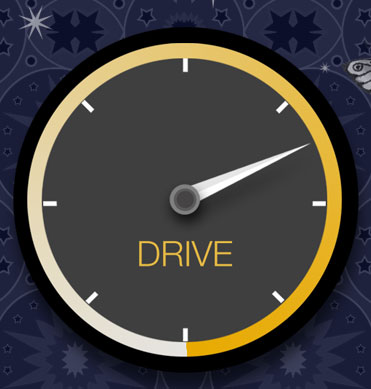
Where the threat system is to get away from danger, the drive system is all about moving towards a reward. The activities that activate your drive system are fun, exciting and engaging.
The drive system is more individual than the threat system. Most people, broadly speaking, fear the same things. Some of us might be concerned about bad things happening to our loved ones and some might be worried about avoiding unemployment but whether it’s loneliness, pain, illness or death, our fears are fairly universally shared.
By contrast, – drive system activities tend to be different for each person. Some people thrive in competitive team sports; others enjoy the challenge of playing a musical instrument. Some people love arguing with strangers on social media; others long to play their favourite puzzle game all by themselves.
The drive system is often quite competitive. It fulfils the need for internal or external validation. You might be motivated by the chance to show off your skill for others to admire, or you might be drawn to that feeling of internal satisfaction as you complete a difficult task. When employed correctly, the drive system can engage a satisfying flow state of creating and learning.
The neurochemical associated with this system is dopamine. Dopamine is often misunderstood to be a feel-good, “pleasure” chemical but it’s actually part of the brain’s motivation system. This is too complex a topic for this article but a simplified explanation is that dopamine is your brain’s way to send a signal that you’ve succeeded at something: “You’ve done a thing. Do more of that.”
Activities that engage the drive system typically require energy and might be tiring. But unlike the threat system, if managed properly, they make you feel enriched instead of exhausted.
Soothe system
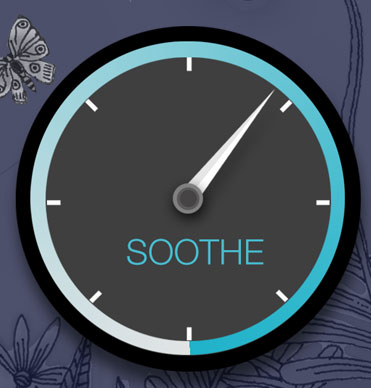
The final self-regulation is the soothe system. Activities that activate this system help you to relax and de-stress. Like the drive system, this is quite individual. Hugging a pet, taking a walk in a forest, snuggling in a duvet with a favourite book, listening to music or meditating –everyone has their own preference.
The soothe system activates the para-sympathetic nervous system. It allows your body to downshift from the stressful “fight, flight -or freeze” response, so that you can sleep and recover. Where the threat system is often triggered by thoughts, soothe system activities typically bring you back into your body – grounding exercises; deep, slow breathing; being immersed in a favourite comfort read; enjoying a favourite drink or snack; or hugging a loved one.
Which system is best for writing?
Each of these three systems, threat, drive and soothe, has its place. It’s not that one is better than the others. When an urgent deadline looms, it might be necessary to remind yourself of the consequences of missing it, so the threat system can be very useful. Drive system activities can be energising but also addictive and exhausting. For example, distracting yourself by scrolling social media. And soothing activities are essential but you would stagnate if you stayed permanently in that state alone.
The next article will cover using this knowledge to support your writing process. How to identify what’s causing your difficulties and which activities you can use to engage the appropriate system.
Part 2 of this series: Get in the writing zone
More reading on this topic:
- An introduction to Compassion-Focused Therapy
- An article about motivational systems (Emotional Regulation Systems)